

Expressive Aphasia
(I've changed . . . )

Expressive aphasia is a new term to me. According to the Dana Foundation (link), “The human brain is basically symmetrical, split down the middle: the right cerebral hemisphere receives sensory input from and directs movement on the left side of the body, while the left hemisphere governs corresponding functions for the right side.”
The call I made to Emergency Services is perhaps something I can ask the 911 dispatch in Philadelphia to recover, but, really, I don’t want to hear the guttural sound I made when the dispatcher asked me where I was. I am pretty sure I was trying to say “Wawa,” but it came out of my mouth like a moaning sound (almost a vowel—“W-a-a-a”).
I knew what I wanted to say, but I was not able to form the words to tell him where I was. I was literally looking at street signs and memorizing them in my brain because there are a lot of Wawa’s in Philadelphia! My brain was working but my expressive language function was short-circuited.
Stories
Anyone who knows me, knows that I love to talk—telling stories about childhood escapades growing up in Providence and South County, Rhode Island; living for a year in Vienna as a teenager (on my own); chatting with hikers on the Long Trail (which drives my more-introverted hiking companions, Annie and Johanna, crazy!); telling my interns about my start on a publishing journey (and eventually founding my own press), and so forth.
Language
But talking? I have always taken it for granted: I can randomly pick up the phone and call a girlfriend; I used to call my mother every day (sometimes twice a day), call one of my kids to see how they are doing, chat with the cashier at the food coop, teach my summer interns (remotely, via Zoom) about the “hidden world of book publishing and its nomenclature,” and “book design from scroll to codex,” and so forth. Talking and teaching equals the joy in my life. Sometimes I even dictate a poem into my phone so I won’t lose it on a hike by myself deep in the woods . . .
Functionality
The right-sided paralysis I could (sort of) deal with when I had my first stroke: I lifted my right leg into the car and scooted over on the seat, then I gently (and with incredulity) picked up my right arm (it was like a frozen, heavy appendage) with my left hand, and moved it out of the way so I could get situated to call 911. Again, my first stroke only lasted for a short time . . . My second stroke remains a mystery. Cliff, the EMS, told me that I stroked in the ambulance and the right side of my face turned into a puddle (I was unconscious).

I remember reading a book called The Diving Bell and the Butterfly, about a man who had a devastating stroke and developed locked-in syndrome. He communicated by blinking his left eye and told his story as a memoir, letter-by-letter. Holy shit: the will to live; to watch his young children grow up (he was only 44 when he had the stroke); to hear his father’s voice on the phone; to imagine the taste of food, the joy of traveling to places he visited in his editorial career in the past . . .
I am beyond lucky to be lying on the couch right now on the screen-in porch, listening to the rain (which we sorely need this summer in southern Vermont) gently tapping the tin roof; luxuriating in my ability to type this essay for my (growing) readership!
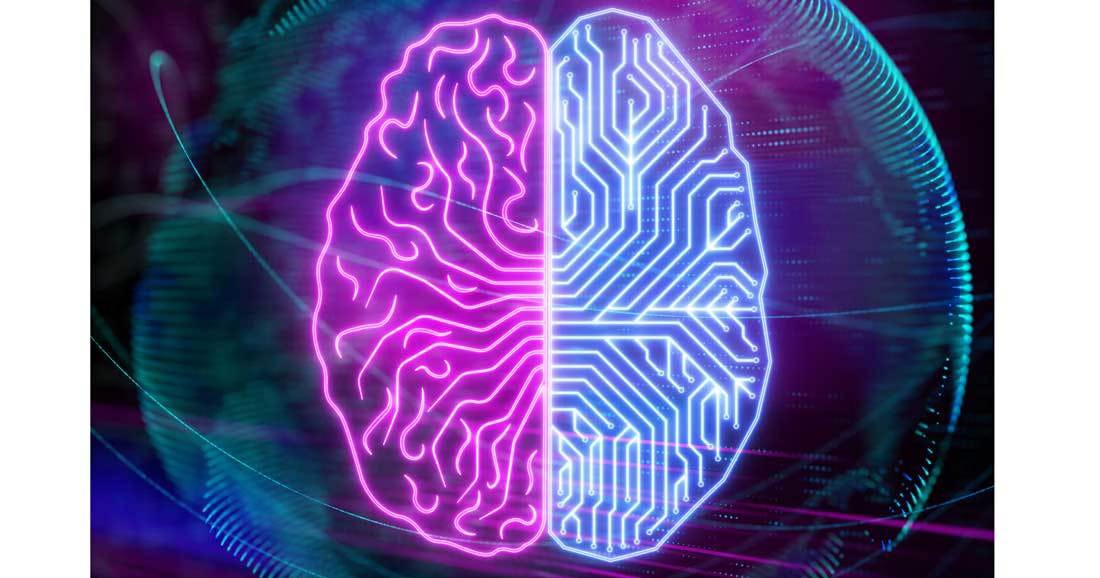
Brain symmetry is a beautiful thing, but the whole idea of “right-sided brain” people being more creative and “left-sided brain” folks being nerdy and more analytical is a misnomer. According to my lay-person foray into neuroscience, the two hemispheres work in tandem—there is an area of the brain that connects the two sides, called corpus callosum.
What’s more, research suggests that a different manifestation of creativity, the ability to make up stories, weaving unrelated objects or phenomena into a coherent narrative, chiefly relies on the left brain. (Dana Foundation)
But handedness is real and a “manifestation of brain lateralization,” according to the Dana Foundation. My husband, Steve, is a lefty and he always notices when someone he meets is also a lefty—they have this instant bond. Around 90% of us are righties! Our eldest child, Sam, is a righty, our middle child, Emma, is a lefty, and our youngest son, Joe, is ambidextrous, which puts him on the 10% side (with the lefties).
What I have learned is that the left frontal lobe of the brain contains speech production, and I am beyond relieved I still have that function, and the expressive aphasia I experienced was fleeting, though terrifying.
Thanks for reading!